
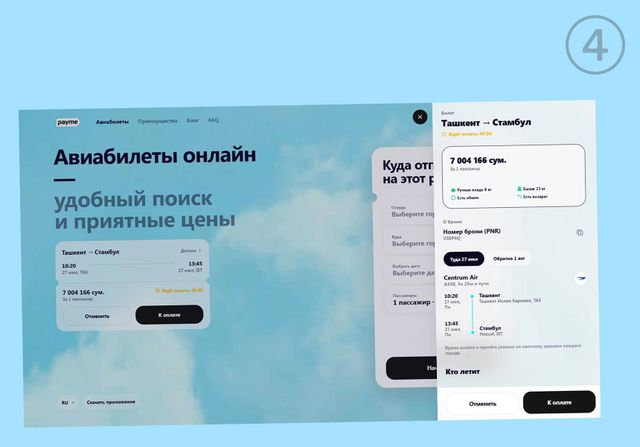
A grandmother in Nukus wants to see her grandson in Tashkent before the school term starts, and her son has to buy the ticket from another city. Until recently that meant phone calls, a trusted agency and a handover of cash. Now payme has launched payme travel, a flight ticket platform in its app and on its website, where the search, the payment and the ticket live in one place.
The launch matters beyond one family. People in Uzbekistan fly for work, study and relatives, and the size of the country turns air travel into an ordinary practical choice rather than a luxury. A new booking option is a good moment to ask what a buyer should actually expect from any online ticket service.
Why a ticket search starts with a country, not a city
Most people do not begin with a flight number. They begin with a loose idea: somewhere, sometime next month, as cheaply as sensible. That is why broad queries such as авиабилеты узбекистан (flight tickets in Uzbekistan, as Russian speakers type it) are so common. The person has not decided yet and wants to see what exists.
A platform that answers this kind of search well shows a range of routes and dates instead of forcing an early decision. The buyer can compare a domestic hop with a regional trip, then narrow down once prices and times appear on the screen. It sounds trivial, but it is the difference between a search tool and a form to fill in.
There is an honest limitation. Not every route flies every day, and some airports see only a few departures a week. A broad search shows what is available, not what would be convenient, so the traveler still has to read the timetable with a calendar open. A family planning a visit around a wedding or an exam date should check the weekday of each flight before falling in love with a price.
Domestic routes and the distances that shape them
Uzbekistan stretches a long way from east to west. Fast trains connect some big cities comfortably, and for those trips the train is often the more relaxed option. Further out, toward Karakalpakstan and Khorezm, the picture changes. A day on the road or rails becomes an hour or two in the air, and for a business trip or a hospital appointment that difference decides everything.
Domestic flights also work as feeders. Travelers from regional cities often reach Tashkent first and continue abroad from there, so the domestic leg and the international leg are really one journey. Buying them as separate tickets is possible, but it carries a risk: a delay on the first flight does not oblige the second airline to wait.
The sensible rule is to leave generous time between two separate tickets, or to look for a single booking that covers the whole route. Airlines treat a connection on one ticket very differently from two unrelated purchases, and the buyer should know which one they are holding before paying.
What changes when the ticket is bought online
The most visible change is the missing queue. A traveler searches, chooses a flight, enters passenger details and pays by card, and the electronic ticket arrives by email. According to the service pages, local and international cards are accepted and a purchase does not require registration. For anyone who once planned an afternoon around an agency visit, that is a real saving of time.

The quieter change is responsibility. In an office, an agent catches a misspelled surname or a wrong date. On a screen, the buyer is the agent. The name must match the passport exactly, the date of birth must be right, and the contact email must be one the traveler actually checks. Errors in these fields are the most common reason for paid changes and, occasionally, for refused boarding.
It also helps to read the fare conditions before paying, not after. Baggage, changes and refunds depend on the fare, and a cheaper fare may carry fewer of them. The rules belong to the airline, and a booking platform only displays them.
Regional and international flights from the same search
People in Uzbekistan often search in the language they speak at home, and many type phrases like avia chiptalar (flight tickets in Uzbek) when they start looking for a trip abroad. The same search window then has to handle Moscow, Istanbul, Dubai, Almaty and many smaller destinations, each with its own timing and rules.
For international trips, the traveler should separate two questions. The first is the flight: dates, times, airline and fare. The second is the journey: passport validity, visa or entry rules, and any health or customs requirements. A ticket platform can answer the first. The second belongs to the foreign ministry of the destination country and to the airline, and rules change without much warning.
A direct flight is usually simpler, but a connection can be cheaper, and sometimes it is the only option for a smaller city. If a connection is chosen, the layover deserves attention. Too short and a delay ruins the trip, too long and the saving disappears into a night at the airport.
Small habits that keep a trip affordable
Flexible dates are the strongest tool a traveler has. Flying on a Tuesday instead of a Friday, or returning a day later, often changes the total more than any clever search trick. A platform that shows nearby dates in one view makes this easy, but the buyer still has to be willing to move.
Seasons matter as much. School holidays, public holidays and the weeks around the new year push demand up, and airlines respond by closing their lowest fares early. Booking well ahead of those periods is the most reliable way to keep the price reasonable, while last-minute purchases rarely reward patience on busy routes.
The last habit costs nothing. Before paying, read the passenger details aloud, compare them with the passport and check the date twice. Then save the ticket in more than one place. A traveler who does these things has already avoided the most expensive mistakes of the whole trip, and arrives at the airport with one less thing to worry about.